













After a pipe bursts or a room floods, most of the visible water can be removed within an hour or two. What stays behind, soaked into drywall, framing, and subflooring, is a separate problem that extraction alone does not solve.
Applied structural drying is the process of removing that remaining moisture from the building itself, rather than just the surface. Done correctly, it can save materials that would otherwise need to be torn out and replaced, which matters both for the condition of the home and for how much of the restoration involves rebuilding rather than drying.
This article covers what applied structural drying involves, the equipment behind it, signs a space needs it, and why it matters for how much of a Hutchinson home can realistically be saved after water damage.
What Is Applied Structural Drying?
Applied structural drying is the science of drying a building’s structure, not just the water sitting on top of it. It relies on controlling temperature, humidity, and airflow together so moisture trapped in materials like drywall, wood framing, and subflooring evaporates and is captured before it causes further water damage in Hutchinson.
This is different from simply running a few fans in a wet room. Structural drying is a monitored process, with moisture readings tracked over days to confirm materials are actually reaching a safe, dry range rather than just looking dry on the surface. A room can look and feel dry to the touch while a moisture meter still reads well above normal inside the wall or under the flooring, which is why the equipment is paired with ongoing measurement rather than left to run on a fixed schedule.
The Equipment Behind Applied Structural Drying
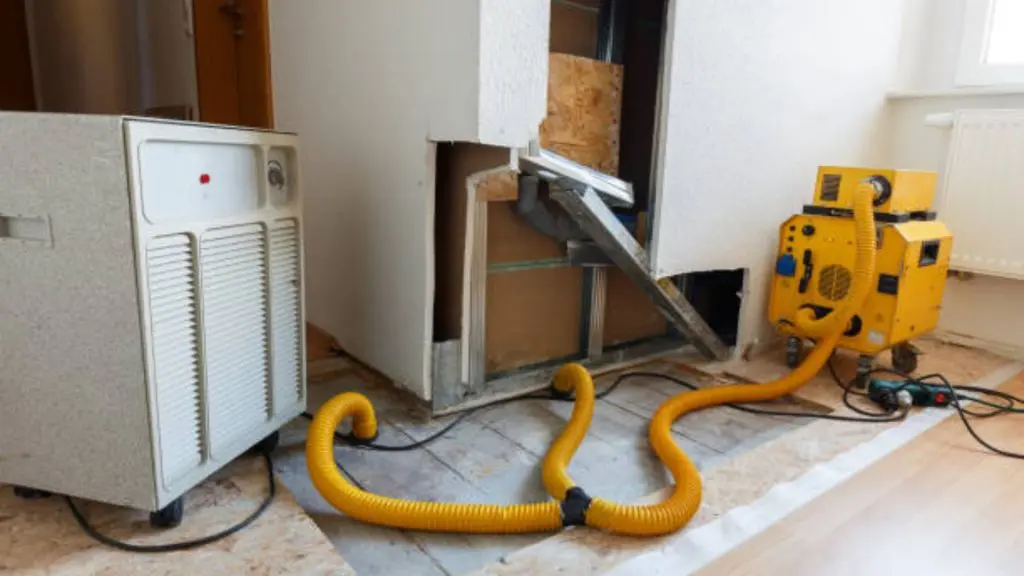
A few categories of equipment work together during a structural drying job, each addressing a different part of the process.
1. Air Movers
Air movers direct airflow across wet surfaces to speed evaporation. Positioning matters here. Air needs to move across the surface at the right angle and speed to pull moisture out efficiently rather than just circulating air around the room.
2. Dehumidifiers
As air movers pull moisture out of materials and into the air, dehumidifiers remove that moisture from the air itself. Without dehumidification, evaporated moisture would simply resettle on nearby surfaces once conditions cooled, undoing the work of the air movers.
3. Moisture Meters and Hygrometers
Moisture meters measure how much water specific materials, like drywall or wood framing, have absorbed. Hygrometers measure humidity levels in the air. Both readings guide decisions about how long drying equipment needs to run and whether a material is approaching a safe range.
4. Injection and Cavity Drying Systems
Some water intrudes into spaces that standard air movers cannot reach directly, such as wall cavities or under cabinetry. Injection drying systems push air into these enclosed spaces to dry them without removing the wall or cabinet itself, which can preserve materials that would otherwise need to be cut out.
Signs a Space Needs Structural Drying, Not Just Surface Cleanup
A few signs suggest moisture has moved beyond the surface and into the structure itself, even after standing water has been removed.
- A musty smell that lingers days after visible water is gone, which often points to moisture still trapped inside walls or flooring.
- Walls or baseboards that feel cool or slightly damp to the touch, even when they appear dry.
- Baseboards separating from the wall or trim that has started to warp or bow.
- Condensation forming on windows near the affected room well after the initial water event.
- Moisture meter readings that stay elevated during a follow-up check, even after fans have been running for a day or more.
How Our Structural Drying Process Works
When we set up structural drying in a Hutchinson home, our process starts with mapping the extent of the moisture using meters and, where needed, thermal imaging, so the equipment plan matches the actual scope of the water intrusion rather than just the visibly wet area.
From there, we position air movers and dehumidifiers based on the layout of the affected space and the materials involved, since a room with hardwood flooring dries differently than one with carpet or tile.
We monitor moisture levels through the drying period, adjusting equipment placement as materials dry at different rates, and confirm materials have reached an acceptable moisture range before drying equipment comes down. This step-by-step monitoring is what separates a structural drying process from simply leaving fans running and hoping for the best.
Why Structural Drying Can Save Materials That Look Ruined
Materials that appear damaged immediately after a flood are not always beyond saving. Solid wood framing, subflooring, and some types of drywall can often be dried in place if the drying process starts soon enough and is monitored closely.
The alternative, cutting out and replacing materials without attempting to dry them first, is sometimes necessary, particularly with materials that sat in contaminated water or were saturated for an extended period. But for clean water situations addressed quickly, structural drying frequently preserves more of a home’s original materials than homeowners expect, which can also reduce the overall cost and disruption of the restoration compared to a full tear-out and rebuild.
What Affects How Long Structural Drying Takes
A few factors influence how many days a structural drying job runs.
- How much water was involved and how far it spread before drying began.
- What materials absorbed the water, since dense materials like hardwood or plaster generally take longer to dry than more porous ones.
- Ambient humidity in the area, since higher humidity slows how quickly moisture can be pulled out of the air by dehumidifiers.
- Whether the water reached enclosed spaces like wall cavities, which typically require injection drying and add time to the process.
Frequently Asked Questions
How Is Structural Drying Different From Just Removing Water?
Water extraction removes standing water from a surface, while structural drying addresses the moisture that has already been absorbed into building materials like drywall and framing. Both steps are usually part of the same overall restoration job.
How Long Does the Structural Drying Process Usually Take?
It depends on the extent of the water intrusion and the materials involved. A contained area may dry within a few days, while a larger or more saturated space can take longer.
Can Structural Drying Save Hardwood Floors?
In many cases, yes, if the flooring is addressed quickly and does not show significant cupping or warping. Severely warped or delaminated wood may need replacement instead.
Do I Need to Leave My Home During Structural Drying?
Not usually, though rooms with active drying equipment can be noisy and access to those specific areas may be limited while equipment runs.
Does FreshCo Use Structural Drying for Both Residential and Commercial Properties?
Our structural drying process is scaled to the property, whether that is a single room in a home or a larger commercial space, with equipment placement adjusted to the layout involved.
Final Thoughts on Applied Structural Drying
Structural drying is what actually determines how much of a water-damaged home can be preserved rather than replaced. The equipment matters, but so does the monitoring that confirms materials have truly dried rather than just appearing dry on the surface, since skipping that step can leave hidden moisture behind long after a room looks finished.
If your Hutchinson home has water damage that needs more than surface cleanup, reach out to FreshCo Cleaners. We can assess the extent of the moisture and set up a drying plan aimed at saving as much of your home’s original materials as possible.