














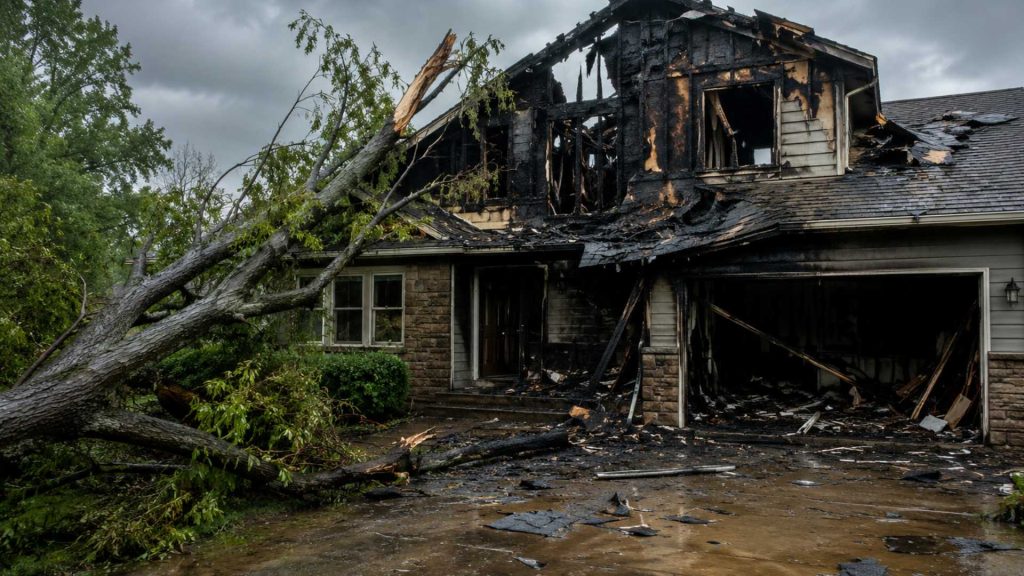
Summer storms in Manhattan don’t just mean flooded streets and downed branches. Lightning strikes, overloaded electrical systems, and storm-damaged wiring can spark fires inside homes and buildings when people least expect it.
These fires often catch residents off guard, since the danger builds quietly behind walls or in electrical panels long before flames or smoke become visible. In a city packed with older prewar buildings and shared walls, a single storm-related fire can also put neighboring units at risk, making a fast, informed response even more important.
If your property has taken fire damage after a recent storm, knowing what to do next, and who to call, makes a real difference in how much you can save.
How Summer Storms Can Lead to Fire Damage
Lightning is the most direct cause, striking rooftops, chimneys, and exterior walls, and igniting whatever it hits on the way in. But storms cause fire damage in less obvious ways too. Power surges from grid instability during storms can overheat outlets, appliances, and old wiring, especially in Manhattan’s older buildings and prewar apartments.
Heavy rain and flooding can also short-circuit electrical panels, creating sparks in walls or utility rooms that smolder before anyone notices. By the time smoke or flames are visible, the damage may have already been building for hours.
Fire Damage Restoration Tips After Storms
Once a fire has been put out, what happens in the next few hours and days matters just as much as the fire itself. These steps can help protect your property and set up a smoother restoration process.
1. Wait for Property Clearance
It’s tempting to go straight back inside to check on things, but fire departments and building inspectors need to confirm the property is structurally safe first. Smoke-damaged structures can have weakened floors, compromised electrical systems, or hidden hot spots that reignite. Going in too soon isn’t worth the risk to your safety.
2. Document Fire Damage
Before anything gets touched, cleaned, or moved, take photos and video of every affected area, walls, ceilings, floors, furniture, and personal belongings. This documentation is critical for insurance claims and gives your restoration team a clear starting point for assessing the full scope of damage.
3. Prevent Secondary Damage
Fire damage rarely stays contained to just burned materials. Water from firefighting efforts, soot traveling through HVAC systems, and broken windows exposing the property to weather can all cause damage to spread. Boarding up openings and shutting off water sources, if it’s safe to do so, can limit how much worse things get before professionals arrive.
4. Contact Restoration Professionals Immediately
Soot and smoke residue become harder to remove the longer they sit, and they can permanently stain surfaces or corrode metal within days. Getting a restoration team out quickly gives you the best chance of salvaging materials that would otherwise need full replacement.
Common Fire and Smoke Damage After Storms
A storm-related fire can affect far more than the areas touched by flames. Even after the fire is extinguished, hidden damage from smoke, soot, water, and persistent odors can continue to impact your home if not addressed quickly.
Here are some of the most common issues property owners face after a storm-related fire:
- Smoke Residue Spreads Throughout the Home: Storm-related fires often leave behind more than just charred materials. Smoke residue can travel far beyond the room where the fire started, settling into carpets, upholstery, drywall, and ductwork throughout the property.
- Acidic Soot Causes Lasting Damage: Soot is highly acidic and can etch metal fixtures, appliances, and glass if it’s not removed quickly, leading to permanent surface damage.
- Water Damage Makes Restoration More Complex: Water from the storm or firefighting efforts often soaks materials that the fire never reached, increasing the risk of structural damage and mold growth.
- Smoke Odors Become Deeply Embedded: Lingering smoke odors penetrate porous materials such as fabric, wood, and insulation, making professional deodorization essential to fully eliminate the smell.
The Fire Damage Restoration Process
A proper fire damage restoration follows a structured process designed to address every layer of damage:
- Assessing the property to determine the full extent of fire, smoke, and water damage
- Boarding up windows and tarping roofs to prevent further exposure
- Removing soot and smoke residue from walls, ceilings, and surfaces
- Cleaning or disposing of damaged belongings, furniture, and materials
- Deodorizing to eliminate smoke odor at the source, not just cover it up
- Repairing or rebuilding structural elements affected by fire or water
Each step depends on the one before it, which is why skipping ahead or handling cleanup piecemeal often leads to problems resurfacing later.
Why Manhattan Homeowners Choose FreshCo Cleaners
FreshCo Cleaners has restored fire-damaged homes and buildings across Manhattan, from prewar walk-ups to modern high-rises, and understands the specific challenges that come with the borough’s older infrastructure and dense building conditions.
The team responds quickly, working around tight building access, shared walls, and co-op or condo board requirements that are common throughout Manhattan properties. Every job includes clear communication with homeowners about what’s salvageable, what needs replacing, and what the timeline looks like from start to finish.
FAQs
Fire damage raises a lot of questions fast, especially when insurance and timelines are involved. Here are answers to what Manhattan property owners ask most.
How soon should fire damage restoration start after a fire?
As soon as the property is cleared by fire officials, ideally within 24 to 48 hours. Acting quickly also reduces the chance of mold developing in any water-affected areas left over from firefighting efforts.
Will my homeowners insurance cover fire damage restoration?
Most policies cover fire damage, but coverage details vary depending on the cause and your specific policy. Reviewing your policy or speaking with your insurance provider directly is the best way to confirm what’s included.
Can smoke odor be fully removed from a property?
In most cases, yes, though it depends on how deeply the smoke penetrated porous materials like drywall, insulation, and fabric. Deeper penetration usually means a longer treatment process, sometimes involving sealing and repainting affected surfaces.
What’s the difference between fire damage and smoke damage?
Fire damage refers to direct burn and heat damage, while smoke damage covers the soot, residue, and odor that spread beyond the immediate fire area, often affecting far more of the property.
Do I need to move out during fire damage restoration?
It depends on the extent of the damage. Minor incidents may not require relocation, while significant structural or smoke damage often does for safety and air quality reasons.
Request Fire Damage Restoration in Manhattan
Fire damage doesn’t wait, and neither should you. Soot sets into surfaces, smoke odor spreads deeper, and structural issues can worsen with every day cleanup is delayed. If a summer storm has left your Manhattan property dealing with fire damage, getting the right team involved quickly is the difference between a manageable restoration and a much bigger loss.
FreshCo Cleaners is ready to respond fast, assess the full scope of damage, and walk you through every step of the restoration process, from initial cleanup to full repairs.
Contact FreshCo Cleaners today to request fire damage restoration in Manhattan and start getting your property back to normal.