





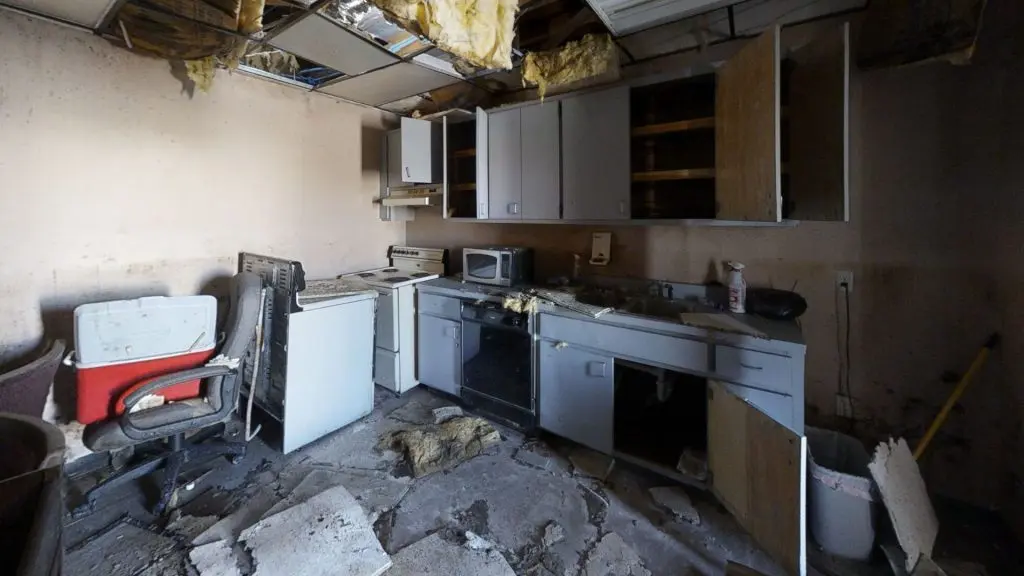
Grease fires and cooking-related incidents make up a large share of house fires, and they leave behind a specific kind of mess. Between grease residue, cooking smoke, and the chemicals from a fire extinguisher, kitchen fires create a combination of damage that requires more than a wipe-down to fully address. This article explains what makes kitchen fire cleanup different from other types of fire damage and what Hutchinson, KS homeowners should expect during the restoration process.
Why Kitchen Fires Leave a Unique Kind of Residue
Cooking fires often involve grease and oil, which burn differently than wood, fabric, or paper and leave behind a sticky, oily residue that clings to surfaces throughout the kitchen and often beyond it. This residue isn’t just on the immediate area of the fire. Grease smoke tends to travel and settle on cabinets, countertops, and even into ventilation systems throughout the house, which means the visible damage at the stove is rarely the full extent of the problem.
How Grease Smoke Differs From Other Smoke Damage
Protein-based residue from a grease fire has a distinct, strong odor and a nearly invisible film that’s harder to clean than the drier soot from a typical structure fire. Standard cleaning products often struggle with this kind of residue since it’s oil-based rather than water-soluble, which is why kitchen fire cleanup calls for different cleaning agents and techniques than a general smoke damage job.
What a Fire Extinguisher Adds to the Cleanup
If a fire extinguisher was used, that adds another layer to the cleanup. Dry chemical extinguishers leave a fine, corrosive powder that can damage countertops, appliances, and electronics if it isn’t cleaned up promptly, since the chemicals can be mildly corrosive to certain metals and surfaces over time. This residue often spreads well beyond the immediate fire area simply from the force of discharging the extinguisher.
The Kitchen Fire Cleanup Process
Kitchen fire cleanup typically addresses several distinct types of damage that occurred simultaneously, each requiring its own approach.
1. Removing Grease and Smoke Residue From Surfaces
Cabinets, countertops, and appliances need specialized degreasing cleaners to fully remove the oily film left by cooking smoke, since standard household cleaners often just smear the residue rather than lifting it.
2. Cleaning Fire Extinguisher Residue
Extinguisher powder needs to be removed promptly from surfaces and, where present, from inside appliances or electronics that may have been affected, to prevent longer-term corrosion or damage.
3. Addressing Ventilation and HVAC Contamination
Smoke and grease particles can travel through range hood ductwork and HVAC systems, spreading residue and odor to parts of the home well outside the kitchen if the system was running during or after the fire.
4. Odor Elimination
Grease smoke odor tends to be more persistent than odor from other types of smoke because of how the residue bonds to surfaces, often requiring specialized odor treatment beyond standard cleaning to fully resolve.
What Homeowners Should Avoid Doing Themselves
A few common instincts after a kitchen fire can actually make the cleanup harder. Scrubbing grease residue with standard household cleaners can spread the film rather than removing it, and running the exhaust fan or HVAC system before the area is assessed can spread contamination further into ductwork. It’s also worth avoiding the use of appliances that were near the fire, even if they look undamaged, until they’ve been checked for smoke or heat exposure that could affect their safety.
When Cabinets and Countertops Can Be Saved
Whether cabinets and countertops can be cleaned and restored versus needing replacement depends on the material and how close they were to the fire. Solid surfaces like laminate or sealed wood often respond well to professional degreasing, while materials that were directly exposed to flame or extreme heat may have structural damage that goes beyond a cleaning solution. We assess each affected surface individually rather than assuming a blanket approach across the whole kitchen.
Insurance Considerations for Kitchen Fires
Cooking fires are generally covered under standard homeowners insurance the same way other accidental house fires are, though it’s worth documenting the extent of smoke and grease damage carefully, since it often extends further than what’s immediately visible. Photographing affected areas before cleanup begins, including cabinets, ceiling areas near the stove, and any nearby rooms with a noticeable smoke smell, supports a more accurate claim.
Preventing Future Kitchen Fires
A few habits reduce the risk of a repeat incident. Keeping a close eye on anything frying or cooking with oil, keeping flammable items like towels and paper away from the stovetop, and having a properly rated fire extinguisher accessible in the kitchen all reduce both the likelihood and severity of a future cooking fire.
What This Means for Hutchinson Kitchens
Many Hutchinson homes feature open-concept layouts connecting the kitchen to a dining or living area, which means grease smoke from a stovetop fire has an easier path to spread into adjoining spaces than it would in a home with a fully enclosed kitchen. Older homes in the area may also have range hoods that vent into the attic rather than outside, which can mean smoke and grease particles get trapped in attic insulation rather than being carried out of the house entirely. Knowing the layout and ventilation setup of a specific home helps determine how far an assessment needs to extend beyond the kitchen itself.
Frequently Asked Questions
Why Does My Kitchen Still Smell Like Smoke After Cleaning?
Grease-based smoke residue bonds to surfaces in a way that standard cleaning often doesn’t fully remove, leaving behind an odor even after visible soot is gone. Specialized degreasing and odor treatment usually resolve this more effectively than repeated standard cleaning.
Can I Use My Kitchen Appliances After a Small Grease Fire?
It’s best to have appliances near the fire checked before using them again, since heat and smoke exposure can affect wiring or components even without visible damage. This is especially important for anything that was directly in the path of flames or extinguisher discharge.
Does Homeowners Insurance Cover Kitchen Fire Cleanup?
Cooking fires are typically covered under standard homeowners policies the same as other accidental fires, though coverage details and documentation requirements vary by policy. Checking with your insurance provider confirms what applies to your specific situation.
How Far Can Grease Smoke Damage Spread Beyond the Kitchen?
Grease smoke can travel through HVAC systems and open doorways to affect adjoining rooms, and in more significant fires, it can reach throughout the house. An assessment of the full property, not just the kitchen, gives an accurate picture of the damage.
Is Fire Extinguisher Residue Dangerous to Breathe?
Dry chemical extinguisher residue can cause respiratory irritation if it lingers in the air or on surfaces, which is part of why prompt, thorough cleanup matters beyond just the visual mess it leaves behind.
Final Thoughts on Kitchen Fire Cleanup
A kitchen fire leaves behind more than char marks near the stove. Grease residue, smoke odor, and extinguisher chemicals each require their own cleanup approach to fully restore the space. For Hutchinson homeowners dealing with a recent cooking fire, addressing all three types of damage properly makes the difference between a kitchen that looks clean and one that’s actually restored. If your kitchen has experienced fire damage, FreshCo Cleaners can assess the full scope of the cleanup needed for your home.