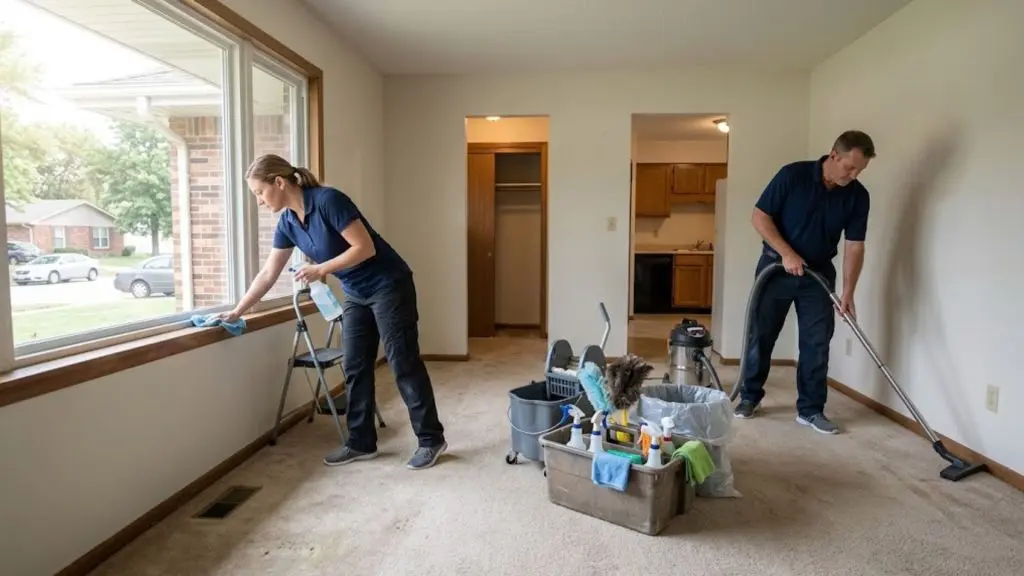


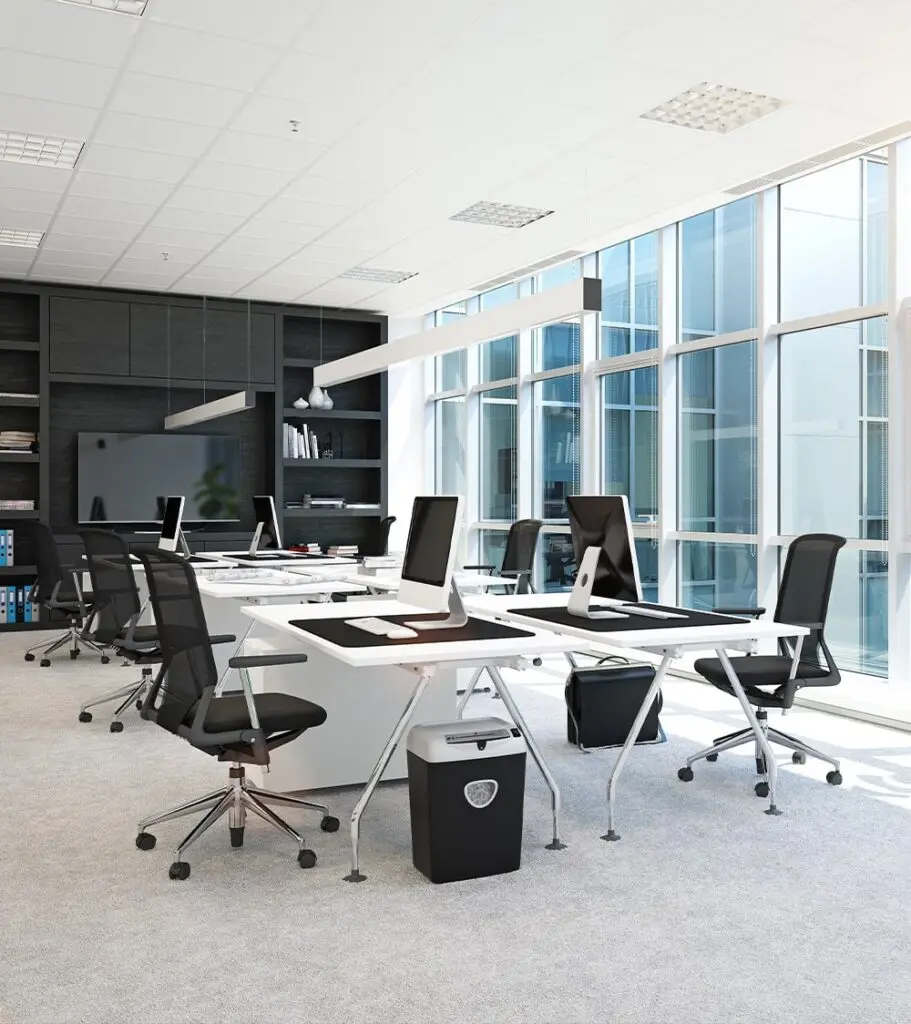



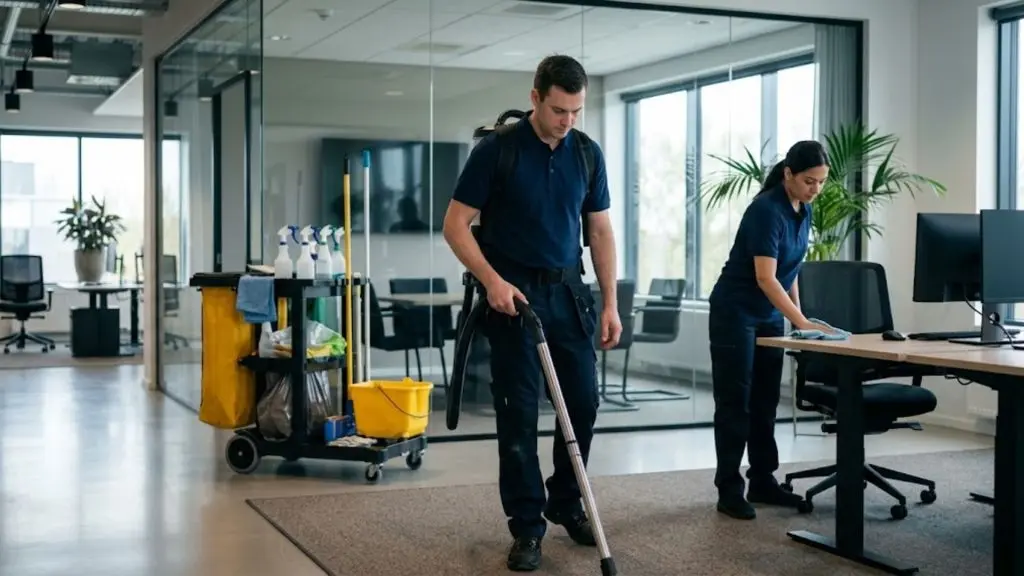
A clean workplace does more than look tidy. It shapes how customers judge your business the moment they walk in, keeps your staff healthier through cold and flu season, and protects the flooring, fixtures and surfaces you have invested in. For many McPherson business owners, though, the real question is a practical one: what does a janitorial contract actually cover, and where does one service end and another begin?
That uncertainty is common. The word “janitorial” gets used loosely, and two quotes for the same building can describe very different scopes of work. Knowing what belongs in a standard cleaning program helps you compare providers fairly and avoid paying for gaps you only notice later.
This guide breaks down what commercial janitorial services in McPherson, KS typically include, how recurring cleaning differs from deeper periodic work, and the questions worth asking before you sign. Our team at FreshCo Cleaning & Restoration supports commercial spaces throughout the McPherson area, and we have written this to help you make a clear, informed decision.
What Are Commercial Janitorial Services?
Commercial janitorial services are the recurring, routine cleaning tasks that keep a business clean, sanitary and presentable on an ongoing basis. The work usually runs on a set schedule, daily, several times a week, or weekly, and follows a defined scope agreed on in advance.
The focus is maintenance rather than one-time results. Instead of a single big clean, janitorial service keeps a facility at a consistent standard over time so dirt, dust and germs never get a chance to build up. For offices, medical suites, retail stores, warehouses and other McPherson workplaces, that steady rhythm is what keeps the space reliably ready for employees and customers.
Scope matters more than the label. A clear janitorial agreement spells out exactly which tasks are performed, how often, and in which areas, so there is no confusion about what is covered. That written scope is the difference between a predictable service and one that leaves surprises.
Core Tasks Included in a Standard Janitorial Program
Most commercial cleaning programs share a common foundation of recurring tasks. The exact list depends on your facility and how often the team visits, but the following items form the backbone of nearly every janitorial scope.
General Cleaning and Surface Care
Routine surface cleaning covers the visible, high-use areas of a workspace: wiping down desks, counters, tables, reception surfaces and shared equipment, plus dusting of ledges, sills and fixtures. These are the surfaces people touch and see most, so they set the tone for how clean a space feels.
This category also includes spot-cleaning glass doors, interior partitions and entry glass where fingerprints and smudges collect. In shared workspaces, regular attention to communal surfaces helps limit the spread of everyday germs between staff. The goal is a space that looks maintained every day, not just after a deep clean.
Floor Care: Vacuuming, Sweeping and Mopping
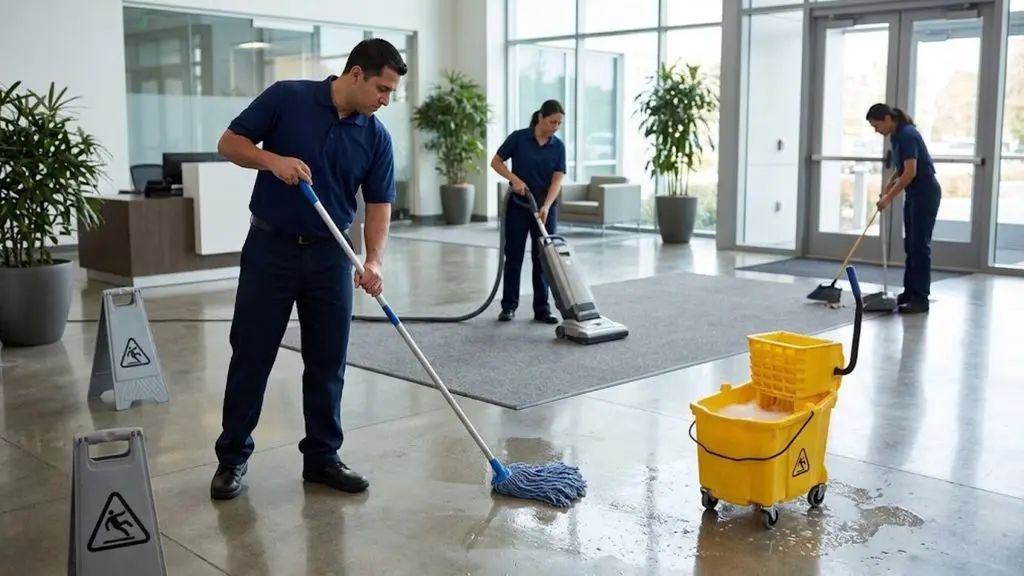
Floors take the heaviest wear in any commercial building, so floor care is central to janitorial work. Carpeted areas are vacuumed to pull out dirt and grit before it grinds into the fibers, while hard floors are swept and mopped to stay clean and slip-resistant.
Different flooring needs different handling. Tile, vinyl, concrete and laminate each respond best to specific methods and products, and entryways need extra attention because they catch the most tracked-in debris, especially during Kansas winters and wet spring weather. Keeping grit off hard floors also slows down scratching and dulling over time.
Routine floor care keeps surfaces clean, but it does not replace periodic deep treatments like carpet extraction or hard-floor refinishing. Those are usually scheduled separately, which we cover further down.
Restroom Cleaning and Sanitation
Restrooms are one of the most important areas in any janitorial program because they directly affect hygiene and the impression visitors form of your business. Standard service includes cleaning and disinfecting toilets, urinals, sinks and counters, along with mirrors and partitions.
Restroom care also covers restocking consumables such as soap, paper towels and toilet paper, emptying sanitary bins, and cleaning floors so they stay fresh rather than developing odors. Because restrooms see constant use and hold moisture, consistent attention here prevents the buildup that leads to lingering smells and unsanitary conditions. For many businesses, restroom condition is the single clearest signal of how well a facility is maintained.
Trash Removal and Recycling
Every janitorial program includes emptying waste bins throughout the facility, replacing liners, and moving collected trash to the designated disposal area. Where recycling is in place, those streams are handled separately so materials stay sorted.
Consistent trash removal is more than tidiness. Left unattended, waste attracts pests, produces odors and creates sanitary problems, particularly in break rooms and kitchens where food waste accumulates. Regular collection keeps those risks in check.
Break Rooms and Kitchen Areas
Shared kitchens and break rooms need focused attention because they combine food, moisture and heavy daily traffic. Standard cleaning covers wiping counters, tables and the exterior of appliances such as microwaves and refrigerators, along with cleaning sinks and sanitizing high-touch points.
These spaces can harbor bacteria quickly when crumbs, spills and food residue are left to sit. Keeping them clean supports staff health and keeps a frequently used part of the workplace pleasant to be in.
High-Touch Point Disinfection
High-touch disinfection targets the surfaces hands contact most: door handles, light switches, elevator buttons, shared keyboards, phones, railings and appliance handles. These points are among the most common ways germs move through a workplace.
Routine disinfection of these surfaces supports a healthier environment for employees and visitors, which matters year round and especially during cold and flu season. Many businesses in the McPherson area ask for added attention here, and it fits naturally into a recurring janitorial schedule.
Recurring Janitorial Service vs. Periodic Deep Cleaning
A common point of confusion is the line between recurring janitorial work and deeper periodic cleaning. Both keep a facility in good shape, but they serve different purposes and are usually scheduled and priced separately.
Recurring janitorial service is the routine maintenance described above, performed on a regular schedule to keep the space consistently clean. Periodic deep cleaning handles intensive tasks that are not practical to do every visit and only need attention every few months or on a seasonal basis.
Periodic or project-based work often includes:
- Carpet cleaning and hot-water extraction
- Hard-floor stripping, waxing or refinishing
- Interior window and glass cleaning beyond daily spot-cleaning
- High dusting of vents, light fixtures and ceiling corners
- Detailed appliance and fixture cleaning
Understanding this split helps you read a quote accurately. If a proposal looks unusually low, it may cover only recurring tasks and leave deep-cleaning work as separate charges. Asking which category each task falls into keeps expectations clear on both sides.
How Janitorial Needs Differ by Facility Type
No two facilities need the exact same scope. A medical office, a warehouse and a retail storefront each face different cleaning demands, and a good janitorial plan is built around the specific building rather than a generic checklist.
Offices and Professional Spaces
Office cleaning centers on workstations, shared conference and break areas, restrooms and reception, where appearance shapes a client’s first impression. Dust control and routine attention to high-touch surfaces matter here because of close, shared workspaces.
Many offices prefer cleaning after business hours so the work does not disrupt staff, and a predictable evening schedule keeps the space ready each morning. Consistency is the priority: an office that looks cared for every day reflects well on the business operating inside it.
Retail and Customer-Facing Businesses
Retail spaces live and die on presentation, so floors, entryways, glass and restrooms carry extra weight. Customers associate a clean store with a well-run business, and tracked-in dirt or smudged entry glass is noticed immediately.
Because these businesses see steady foot traffic, entrances and high-traffic walkways need frequent attention to stay presentable throughout the day and across changing Kansas seasons.
Warehouses and Industrial Facilities
Warehouses have their own demands: large floor areas, break rooms, restrooms and office zones, often with dust and debris generated by daily operations. Cleaning here focuses on keeping common areas sanitary and maintaining clear, safe conditions in the spaces people use most.
The scale and layout of industrial facilities mean the scope and scheduling need to match the way the building is actually used, rather than a one-size-fits-all plan.
What to Look for in a McPherson Janitorial Provider
Choosing a janitorial partner is easier when you know what separates a reliable provider from a transactional one. A few factors consistently point to a service that will keep your facility in good shape over the long term.
- A clear, written scope of work that lists tasks, frequencies and covered areas
- A schedule built around your hours and operations, not a fixed template
- Consistent crews and dependable communication when needs change
- Flexibility to add periodic deep-cleaning tasks when they come due
- Responsiveness to feedback and the ability to adjust the plan over time
The most important of these is a clear written scope. When everyone agrees up front on exactly what is being cleaned and how often, you avoid the slow drift in quality that happens when expectations are vague.
How Janitorial Services Connect to Facility Restoration
Routine janitorial work and restoration services sit on the same spectrum of facility care, and knowing both exist under one roof can save time when something goes wrong. Day-to-day cleaning keeps a space maintained, but issues like water intrusion, flooding or other property damage call for specialized restoration work rather than standard cleaning.
Because we handle both commercial cleaning and restoration, businesses we already serve have a familiar point of contact if a cleanup emergency arises. If you ever face water damage or need more than routine cleaning can address, it helps to work with a provider who understands your facility and can connect you with the right restoration support. That continuity is one practical advantage of keeping cleaning and restoration under the same company.
Frequently Asked Questions
What is the difference between janitorial services and commercial cleaning?
The terms overlap heavily. Janitorial services usually describe the routine, recurring tasks that maintain a facility, while commercial cleaning is a broader term that can include both that recurring work and larger periodic or deep-cleaning projects. In practice, a strong provider offers both.
How often should a business schedule janitorial service?
It depends on your facility and traffic. High-traffic spaces like retail stores and busy offices often need daily or several-times-weekly service, while smaller or lower-traffic spaces may do well with weekly visits. The right frequency comes from matching the schedule to how the building is actually used.
Can janitorial cleaning be done after business hours?
Yes. Many businesses prefer after-hours or evening cleaning so the work does not interrupt employees or customers. We build schedules around your operating hours so the space is ready for the next day without disrupting your workflow.
Does janitorial service include carpet cleaning and floor waxing?
Usually not as part of routine visits. Deep treatments like carpet extraction and hard-floor refinishing are typically scheduled as periodic or project-based work rather than daily tasks. These can be added to your plan on a seasonal or as-needed basis.
Are cleaning supplies included in a janitorial contract?
In most arrangements, the cleaning crew brings its own equipment and products. Restroom consumables such as soap and paper goods may be restocked as part of the scope, supplied by the client, or billed separately. Confirming this in the written agreement avoids confusion later.
Final Thoughts on Commercial Janitorial Services in McPherson, KS
A good janitorial program keeps your McPherson workplace clean, healthy and presentable through routine attention to surfaces, floors, restrooms, waste and high-touch points, with deeper periodic work scheduled separately as it comes due. The clearer the written scope, the easier it is to compare providers and keep quality steady over time.
When you evaluate options, ask what each task covers, how often it runs, and whether deep cleaning is included or separate. If you want commercial janitorial services in the McPherson area built around how your facility actually operates, our team at FreshCo Cleaners is glad to walk through your space and put a clear plan in writing. Reach out when you are ready to set a cleaning program that holds up day after day.